A client asks whether you can help them make a podcast.
It is easy to see why that can become awkward for an agency. The idea makes sense, it fits comfortably alongside the wider campaign or communications work you are already doing, and saying no means potentially sending the client somewhere else. At the same time, producing a podcast properly can involve a fairly specific set of skills, equipment and workflows that you may have had no reason to build internally.
So what do you do?
You could hire somebody, invest in equipment and gradually build a podcast production department. For some agencies that may eventually make sense. For plenty of others, it probably doesn’t.
White label podcast production gives agencies another option: keep the client relationship and bring specialist production in behind the scenes.
Keep the relationship. Bring in the production.
The bit I think matters most is that the client already trusts the agency.
You understand their organisation, their brand, their audience and the wider work happening around the podcast. In many cases you have already helped develop the idea, so it would be strange if the arrival of a microphone suddenly meant handing the relationship over to somebody else.
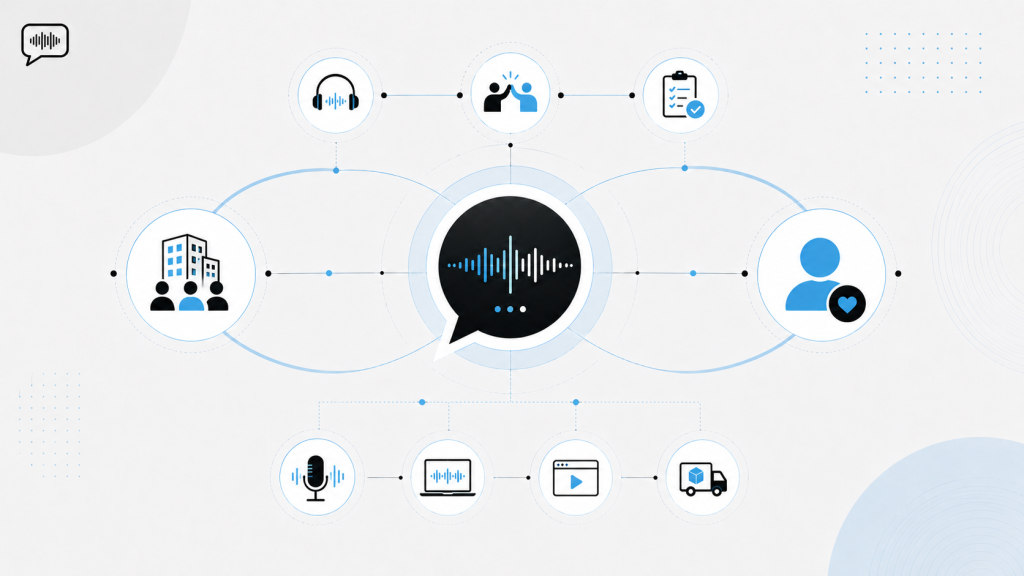
White-label podcast production lets the agency remain at the centre of that relationship while bringing in the specialist production capability behind the scenes.
The client still deals with you. The podcast can sit naturally alongside the branding, PR, campaign, social or communications work you are already delivering. Meanwhile, the parts that require specialist podcast experience can be handled by a production partner.
For us, that might mean helping with the initial podcast strategy, recording, editing, mixing, video, sonic branding, show notes, distribution or creating clips and other material from each episode. Exactly where we fit depends on what the agency already does well.
It does not need to become complicated.
Not every agency needs another department
There is sometimes an assumption that adding a new service means building the entire capability in-house.
That can become expensive very quickly.
Podcast production is not only about owning a few microphones. Somebody needs to manage recordings, understand remote workflows, deal with audio problems, edit conversations, work with music and branding, prepare episodes for different platforms and make sure everything is delivered consistently. Add video and the workflow grows again.
If you already have enough podcast work to keep that team busy, investing internally may be completely sensible.
If you have three clients asking about podcasts this year, it is a rather different calculation.
Using a specialist production partner means the capability is there when you need it without carrying it when you don’t.
It also gives the agency room to test the demand for the service before making a much bigger commitment.
The client doesn’t need to know there is another company involved
This is the bit that makes white-label production particularly useful.
We are not looking to take over the agency’s client relationship.
Depending on the project, One Stop Podcasts can effectively sit behind the agency. The agency presents the service, manages the client and decides how it fits into the wider piece of work. We handle the agreed production work and deliver it back ready for the agency to use.
Sometimes that means we are completely invisible to the client. On other projects it makes more sense for us to join a recording or technical conversation as part of the wider delivery team.
Both can work.
The important thing is that the arrangement supports the relationship the agency already has rather than competing with it.
It also gives you more room to say yes
This is probably the biggest advantage.
A PR agency may be developing a thought-leadership campaign and realise that a podcast would give the client more space to explore the subject.
A branding agency may have developed a new identity and see an opportunity to extend that into how the organisation sounds.
A marketing agency might have a client sitting on years of useful knowledge but struggling to turn it into regular content.
A creative agency may simply have been asked, “Can you do podcasts?”
Being able to say yes without immediately worrying about who is going to edit six hours of dialogue changes that conversation.
You can start by thinking about whether the podcast is a good idea for the client, rather than whether you happen to own the right equipment.
Podcasting can sit inside a much bigger piece of work
This is another reason I think the agency model works particularly well.
A podcast rarely exists completely on its own.
There might be brand strategy around it, a launch campaign, PR activity, social content, paid media, design, photography, video or a wider content programme. Those are often the areas where the agency already has the strongest understanding of the client.
The podcast then becomes another part of that work rather than a separate project disappearing off to a production company.
It can also generate useful material for the rest of the campaign. A conversation recorded for an episode might produce video clips, quotes, an article, social posts or ideas that feed into other communications.
That becomes much easier when the people responsible for the wider campaign are still involved.
The agency should still make a margin
White-label work also needs to make commercial sense.
If an agency is bringing in the client, managing the relationship, contributing strategy and wrapping podcast production into a wider service, it should be able to price that work appropriately.
The production partner is there to provide capability, not to dictate the agency’s commercial relationship with its client.
That could mean a podcast becomes part of an existing retainer, a standalone project or an ongoing content package. Different agencies will package it differently, which is exactly how it should be.
From our side, the useful thing is creating a production scope that is clear enough for the agency to understand what it is buying, what gets delivered and what that costs.
What the agency then builds around it is up to them.
You don’t have to pretend to be podcast producers
There is another benefit that is less obvious.
Working with a specialist partner means the agency does not need to bluff its way through the technical side of a service it has never delivered before.
If a recording needs four people in different locations, we can work out how to do it. If the audio needs repairing, that is our problem. If the client wants video, custom music, distribution or promotional clips, we can build the appropriate workflow.
The agency can stay focused on the things it is already good at.
That tends to lead to a better project for everybody involved, including the client.
Sometimes the most useful capability is knowing who to bring in
Agencies already work like this in plenty of other areas.
A project might involve a photographer, filmmaker, animator, developer, illustrator or specialist freelancer without the agency deciding it now needs to employ every one of those people permanently.
Podcast production does not need to be treated differently.
If clients are beginning to ask about it, there is an opportunity to add the capability without immediately building the infrastructure around it.
Keep the strategy. Keep the relationship. Keep the work connected to everything else you are doing for the client.
Bring in the specialist production when you need it.
That is really what white-label podcasting is for.