Most agencies already work with specialists.
A campaign might involve a photographer, developer, filmmaker, illustrator or freelancer who is not permanently sitting in the agency office. The client does not necessarily care about the employment arrangement behind every part of the project. What matters is that the work feels joined up, the quality is good and somebody they trust remains responsible for the overall result.
I think white-label podcast production should work in much the same way.
If an agency brings us into a project, the aim is not to create another relationship for the client to manage. It is to add a specialist production capability to the relationship that already exists.
Done well, it should feel like part of the agency.
The client relationship comes first
The agency usually knows far more about the client than we do when a project begins.
You may have worked with them for years. You understand how they communicate, what they are trying to achieve, the sensitivities around the brand and the wider campaign or piece of work the podcast belongs to.
That context matters.
A production company arriving with its own ideas about how everything should work can easily make the project more complicated rather than less. Suddenly the client is having similar conversations with two companies, decisions are being made in different places and nobody is quite sure who owns what.
That is exactly what white-label production should avoid.
Our job is to understand enough of the wider picture to produce the podcast properly while allowing the agency to remain where it already belongs, at the centre of the client relationship.
A production partner should fit the way you work
Every agency has its own way of doing things.
Some want us involved early while the idea is still being developed. Others already have the strategy, brand and format worked out and simply need somebody to handle the technical production.
One agency might want finished episodes delivered back ready for approval. Another might want us to manage recording sessions directly with the client but keep everything else running through the agency.
There is no particular reason those arrangements need to be identical.
A useful white-label partner should be able to fit into the existing workflow rather than forcing the agency to rebuild its process around the production company.
That might sound like a small detail, but it has a big effect on how easy the service is to sell and deliver repeatedly.
Invisible does not mean absent
White-label work is sometimes described as though the production company simply disappears.
That can happen. There are projects where the client never needs to know we are involved at all.
But being white-label does not necessarily mean pretending nobody else exists.
Sometimes the most useful thing is for us to join a technical call, attend the recording or help answer a production question directly. The important distinction is that we are there as part of the agency’s delivery team, not as a separate company trying to establish our own client relationship.
There is quite a difference between being visible and competing for ownership of the work.
The arrangement should always support the agency.
Clear handovers prevent a lot of unnecessary work
Podcast production involves more moving parts than people sometimes expect.
There may be briefs, guest details, recording dates, artwork, music, approvals, episode descriptions, clips, distribution information and revisions to keep track of. Video adds another layer.
If nobody has agreed who is responsible for each part, quite ordinary tasks start bouncing between people.
The agency assumes the production partner is chasing the guest. The production partner assumes the agency is doing it. Somebody eventually notices the day before recording.
A good workflow removes as much of that ambiguity as possible.
Who briefs the guest? Who signs off the edit? Where does feedback go? Who publishes the episode? Who sends the final files to the client?
None of these questions is especially exciting, but agreeing the answers early makes the actual creative work considerably easier.
The podcast still has to sound like the client
There is another reason I prefer white-label relationships that are closely connected to the agency.
Branding is not only visual.
A podcast has tone, pace, language, music, voices and a general sense of how polished, formal, conversational or energetic it should feel. Those decisions need to make sense alongside everything else the organisation is putting into the world.
An agency that already understands the client’s brand has useful knowledge here.
The production partner brings experience of how those decisions translate into audio and video. The agency brings the wider context.
That combination is much stronger than treating the podcast as an isolated production job that happens somewhere else.
Specialists should reduce complexity
There is not much point outsourcing something if managing the outsourcing becomes a second job.
The value of bringing in a production partner should be that certain problems stop being agency problems.
How should four remote contributors be recorded reliably? How do we repair a difficult audio track? What happens if a client wants the episode in audio, full video and several social formats? How should the files be organised so the next episode is not starting from scratch?
Those are the kinds of questions a specialist production workflow should absorb.
The agency should still have visibility and control where it matters, but it should not need to become technically involved in every stage simply because the service sits under its name.
Otherwise you have kept all of the complexity and added another supplier on top.
Trust matters on both sides
White-label work needs a slightly different kind of trust from a straightforward supplier relationship.
The agency is trusting somebody else with its reputation.
If a recording goes badly, a deadline is missed or communication with the client is poor, the client is unlikely to care that another company was responsible behind the scenes. From their perspective, the agency offered the service.
The production partner therefore has to understand that they are representing somebody else’s business as well as their own.
There is trust in the other direction too. We need clear information, sensible timelines and an understanding of what has been promised to the client.
When that works, the relationship becomes much easier. You stop treating every podcast as a one-off handover and start developing a repeatable way of working together.
The client should experience one joined-up service
That is probably the simplest test.
From the client’s point of view, does the podcast feel like a natural part of the work their agency is already delivering?
If the answer is yes, the white-label arrangement is doing its job.
The client does not need to understand every piece of production infrastructure sitting behind the project. They need a good podcast, a clear process and confidence that the people they hired know what they are doing.
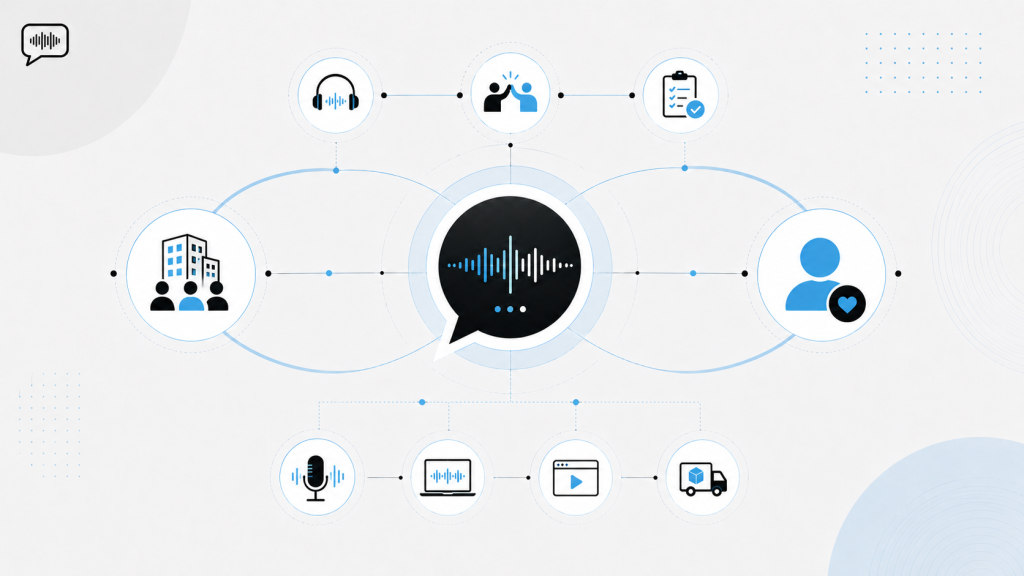
The agency keeps the relationship.
The production partner adds the specialist capability.
And ideally, nobody spends much time thinking about the join between the two.