Podcast Studios by One Stop Podcasts

One Stop Podcasts helps businesses, organisations, schools, colleges, universities and creative spaces create professional podcast and content studios built around what they actually want to make.
From the first conversation and room planning through to the finished setup, configuration and training, we bring the different parts together into one studio that makes sense for the people who will actually use it.
You don’t need to know what microphone you want, what equipment you need or how everything should connect.
You just need to know what you want the space to help you create.
Designed around people, not equipment.
From an idea to room. equipment. workflow. training. possibility.
Buying the equipment is usually the easy part.
You can buy some very good podcast equipment online in an afternoon.
The harder part is knowing whether you’re buying the right things, whether the room is suitable, how everything needs to work together and whether the people expected to use the studio will actually feel comfortable using it once everything is installed.
A good podcast studio isn’t simply a collection of microphones, cameras and cables.
It needs to work as a complete system.
That starts with understanding what the room is actually for.
Who will use it? What will they record? How many people need to be accommodated? Will it be audio only, video, live streamed or used for other types of content too?
Then there are the practical details.
Where should people sit? Where do the microphones go? How will monitoring work? Where should cameras and lighting be positioned? Is the room acoustically suitable? How does somebody walk in, start a recording and know everything is working properly?
Those decisions are often more important than the individual pieces of equipment.
There is also a big difference between equipment that looks impressive on a specification sheet and equipment that works reliably every week.
We look at the complete workflow rather than individual products in isolation.
That means choosing equipment that suits the room, the people using it and the type of content being produced, then making sure everything connects and operates as simply as possible.
Where appropriate, we can source and supply the equipment as part of the project too, so you don’t have to work through long equipment lists or coordinate multiple suppliers yourself.
But installation is only part of the job.
A studio is only useful if people are confident enough to use it.
That’s why setup, testing, workflow design and training are considered from the beginning rather than added at the end.
The aim isn’t to fill a room with impressive equipment.
It’s to create a studio that works.
From idea to working studio.
1: Discover
We start by understanding the room, what you want to create, who will use it, what you already have and how you might want the studio to develop over time.
You don’t need to arrive with a technical specification. In most cases, it’s better if you don’t.
2: Design
Once we understand the project, we work through how the room should function.
That can include layout, recording positions, acoustics, audio, cameras, lighting, monitoring, software and the practical workflow from somebody walking into the room to leaving with a finished recording.
3: Build
This is where the individual parts become a studio.
We bring everything together around the agreed design, configure the system properly and create a straightforward day-to-day recording workflow.
Where specialist electrical, construction, joinery or sound-isolation work is required, we work alongside the appropriate specialists.
4: Test
Once everything is in place, we use it properly.
We record, monitor, check cameras and lighting where appropriate, test the software and file workflow and make sure the whole system works in the way it will actually be used.
5: Train
Then we take the people who will use the room through the actual workflow.
Not every button and menu. Just what they need to confidently prepare the studio, record a session, finish properly and deal with the everyday things that are likely to come up.
6: Support
Once a studio starts being used, requirements often develop.
New staff arrive. New content gets created. Audio becomes video. A one-off podcast becomes a regular series.
We can continue helping as the studio develops.
From an empty room to a studio ready to use.
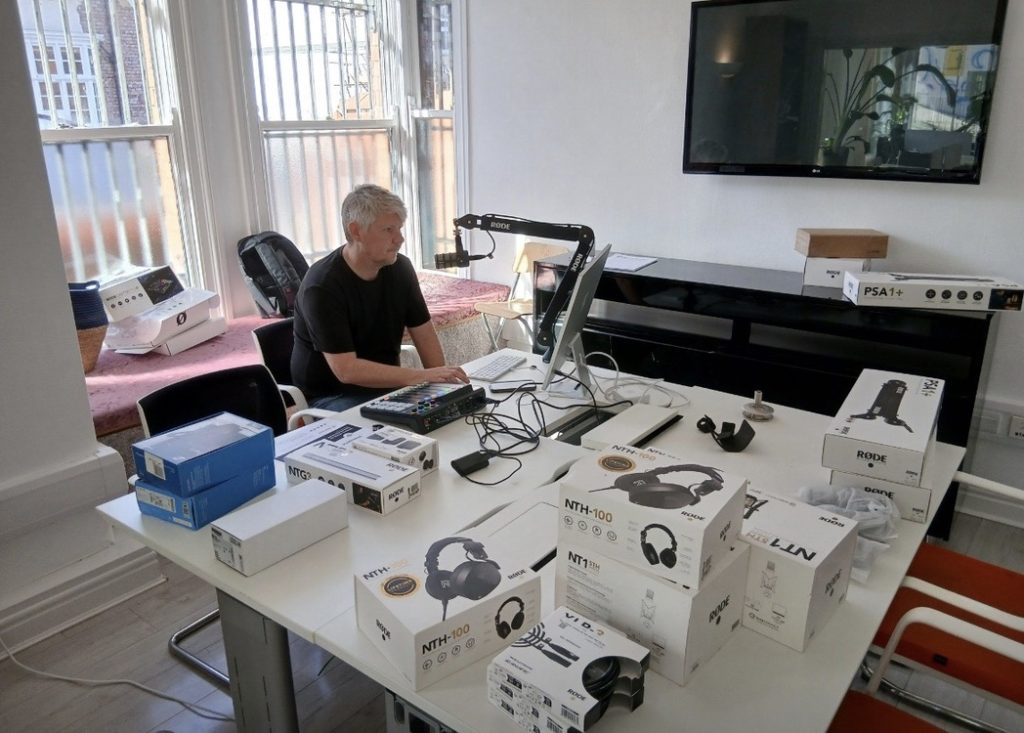
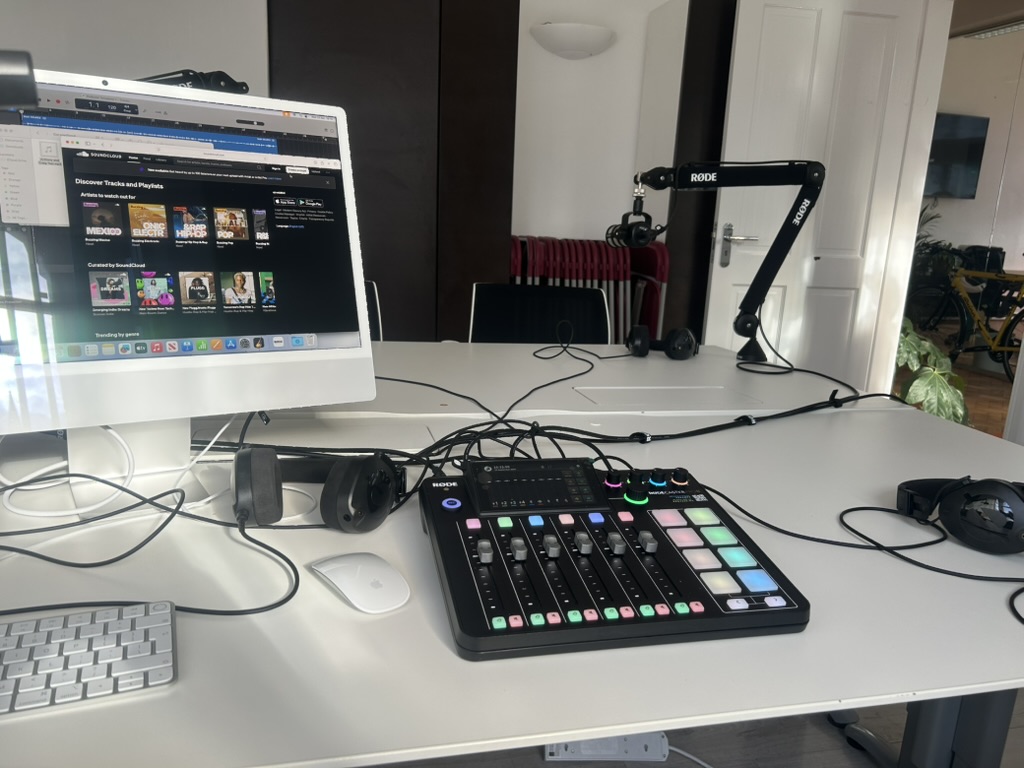
Everything in the room needs to make sense together.
A podcast studio is really a collection of smaller systems that need to behave like one.
A good microphone won’t fix a poor room. A good camera won’t look particularly good if the lighting has been ignored. And even the best recording equipment becomes frustrating if somebody has to remember a complicated sequence of steps every time they want to use it.
So we look at the whole thing.
Depending on the project, that can include the room itself, acoustic treatment, microphone positions, recording and monitoring, cameras, lighting, software, storage, cabling, mounting and the everyday workflow that connects everything together.
The smaller details matter too. They’re often the difference between a room that technically works and a room that people actually enjoy using.
When somebody walks into the finished studio, the setup should feel logical.
They should be able to concentrate on the conversation rather than the equipment around them.
Audio. Video. Or somewhere in between.
Not every organisation needs a three-camera video podcast studio.
For some projects, a simple, properly designed audio room is exactly what is required.
For others, video is an important part of the plan from the beginning, particularly where recordings will also be used on YouTube, LinkedIn and social media.
And some organisations want something broader: one room that can comfortably move between podcasts, interviews, training, internal communications and other regular content.
Audio Podcast Studios
Professional recording spaces for conversations, interviews and spoken-word content without unnecessary complexity.
Audio + Video Podcast Studios
Professional podcast audio combined with a repeatable video setup that makes creating long-form and shorter content much easier.
Podcast & Content Studios
More flexible rooms designed around organisations that want to create podcasts alongside interviews, video, training and wider communications content.
What matters is that the level of complexity matches what you genuinely intend to do with the room.
The right studio is the one you’ll actually use.
One room can create a lot.
Once an organisation has somewhere that is permanently ready to record, the space often becomes useful for much more than the original podcast idea.
A company might use the same studio for its podcast one day, a leadership interview the next, then customer stories, internal communications, training or social video later in the week.
The value isn’t simply having somewhere with microphones and cameras.
It’s removing the friction that normally comes before creating anything.
You don’t have to find a suitable room, rebuild the recording setup and work out where everything plugs in every time somebody has something worth saying.
The room is already there.
And because the workflow is designed around the people who need to use it, it doesn’t have to rely on one technically minded person always being available.
Podcast Studios for Education.
Designed for teaching. Built for students to use.
A school, college or university podcast studio has to do more than sound good.
It needs to work for the people using it, often across different subjects, age groups and levels of technical confidence.
That’s where our experience across both education and professional podcast production becomes particularly useful.
We can think about the room itself, but also what happens once the room is finished.
How will staff introduce students to it? How much technical knowledge do they really need? How can it support coursework, enrichment, student voice or wider communication? And what will help people use the studio independently rather than relying on one member of staff who knows how everything works?
Where useful, education projects can also include staff training, student introductions, simple recording workflows, supporting resources and links into our wider Podcasting in the Classroom workshops and CPD.
The goal isn’t simply to leave a school with a studio.
It’s to leave them with the confidence to actually use it.
Already have the equipment?
That’s not unusual.
A lot of organisations get quite a long way before they realise the individual pieces haven’t quite become a studio yet.
You might already have microphones, headphones, a recording system and a computer. Everything may technically work, but the process still feels awkward, only one person understands it or the room simply isn’t being used as often as you expected.
We can start there too.
Sometimes the answer is a completely new setup. Quite often it isn’t.
It may simply mean looking at what you already have, changing how it is connected, improving the room, simplifying the recording process and making sure the people using it know what they’re doing.
You may not need a new studio.
You may just need the one you already have to work better.
A studio your team understands.
Training isn’t something we tack onto the end of an installation.
It’s part of whether the studio succeeds.
We want the people using the room to understand the everyday routine without feeling that they need to become audio engineers first.
That might mean knowing how to start the system, prepare the microphones, check levels, monitor a recording, operate cameras and lighting where required, deal with remote contributors, save the files properly and know what to check when something doesn’t behave as expected.
We keep the training focused on the actual room and the people using it.
No unnecessary technical language. No attempt to explain every function the equipment is capable of.
Just what people genuinely need to use their studio confidently.
Where appropriate, we can also create straightforward guidance around the finished setup so the team has something useful to return to once the training session is over.
The studio should belong to your team, not to the person who installed it.
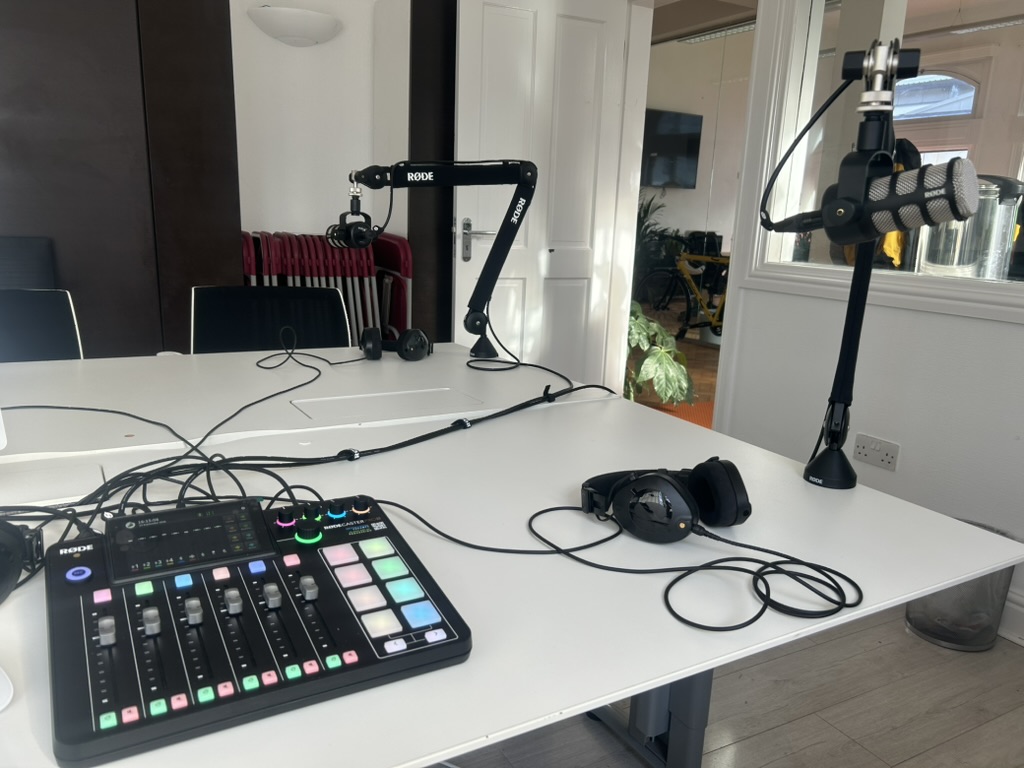
From new equipment to a working podcast setup.
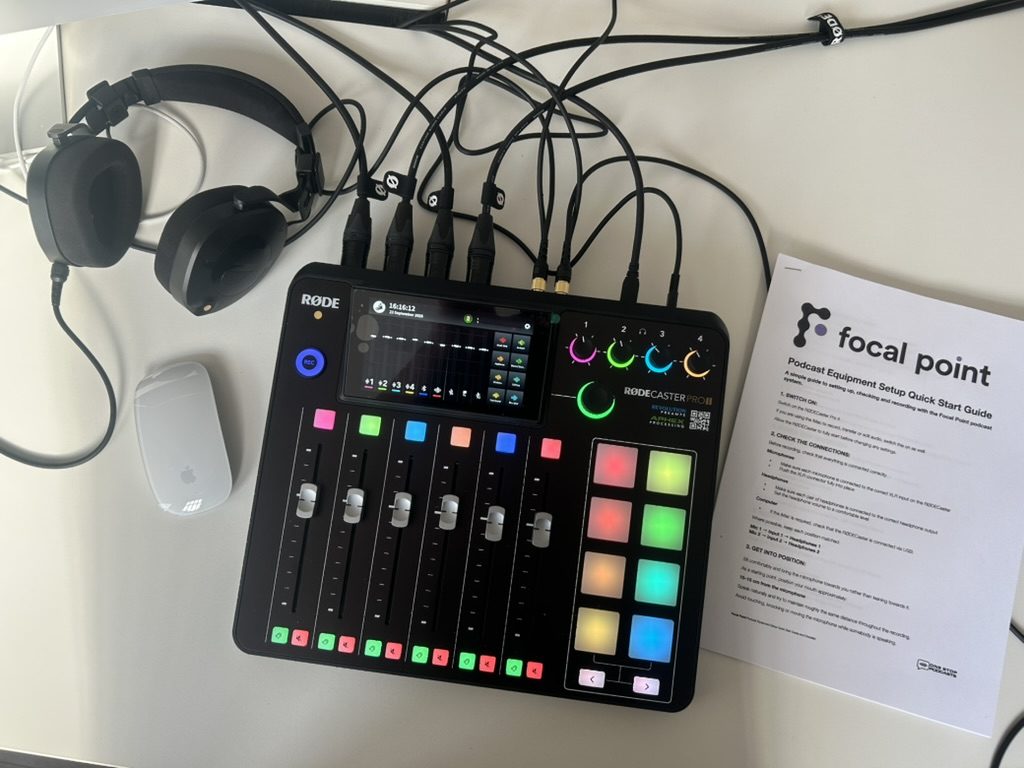
Our work with Focal Point Creative Technology Hub is a good example of the thinking behind this service.
Focal Point had already invested in brand-new podcasting equipment. The individual pieces were there, but the team needed them turning into a setup that made sense in practice.
We helped configure the system, establish the recording workflow, test how everything worked together and then took staff through the way they would actually use it day to day.
What mattered at the end wasn’t that everything had been plugged in.
It was that the team understood what they had and could start using it.
That thinking sits at the centre of Podcast Studios by One Stop Podcasts.
Studio support for agencies.
A client asks if you can help them create a podcast or content studio.
You can say yes.
One Stop Podcasts can work behind creative, marketing, branding, PR and communications agencies as the specialist podcast partner on studio projects.
That might mean helping shape the initial opportunity, thinking through the room and workflow, developing the studio approach or taking responsibility for the specialist podcast side of the project.
We can work openly alongside your agency or behind your brand.
You keep the client relationship.
We provide the specialist expertise behind it.
Your agency. Your client. Our podcast expertise.
Start with the room, not the shopping list.
You don’t need a finished plan before getting in touch.
In fact, the first conversation is often most useful when you still have questions.
Tell us what you’re thinking of creating, what space you have available, who will use it and anything you already own.
From there, we can work out what makes sense.
That might mean creating a completely new studio. It might mean developing an existing room. Or it might turn out that what you need is much simpler than you first expected.
The recommendation should follow what you actually need.
Not the amount of equipment we can fit into the room.
frequently asked questions.
Do we need to know what equipment we want?
No. It’s normally much more useful to start with what you want the studio to achieve and who needs to use it. Once we understand that, we can work backwards into the equipment and setup that make sense.
Can you work with a room we already have?
Yes. Most organisations aren’t starting with a purpose-built studio shell. An office, classroom, meeting room or other existing space may work perfectly well depending on the environment and what you want to record.
Can you use equipment we already own?
Yes. If you’ve already invested in suitable equipment, there’s no reason to replace it simply for the sake of starting again. We can look at what you have and work out what makes sense to retain, change or add.
Can you create both audio and video studios?
Yes. Some projects are deliberately audio-only. Others include video from the beginning, while some are designed as broader podcast and content spaces. We’ll recommend an approach based on how you expect to use the room.
Do we need to soundproof the studio?
Not automatically. Soundproofing and acoustic treatment solve different problems, and plenty of podcast spaces don’t require major structural sound isolation. We’ll look at the room, surrounding noise and intended use before recommending what is genuinely necessary.
Do you provide training?
Yes. Training is an important part of the way we approach studio projects because the installation only has real value if people feel confident using it afterwards.
Can you work with schools, colleges and universities?
Yes. Education is a particularly strong fit because we can combine the studio itself with staff training, student activity and our wider Podcasting in the Classroom work.
Can you work with agencies on behalf of their clients?
Yes. We can work visibly as a specialist partner or behind your agency as part of a white-label relationship, depending on what works best for the project.
Can you help once the studio is up and running?
Yes. We can continue supporting the studio as it develops, whether that means technical help, refresher training, workflow changes, future improvements or ongoing podcast production.
Your podcast studio doesn’t need to start with a shopping list.
It can start with a conversation.
Maybe you already have a room in mind.
Maybe you’ve bought some equipment and aren’t sure what comes next.
Or perhaps you simply know that having somewhere to create podcasts and content in-house would be useful.
You don’t need to have all of the answers before getting in touch.
Tell us what you’re thinking.
We’ll help you work out what comes next.